Featured Projects


ISECO\'s team of professional engineers has engaged in over 500 projects across a broad spectrum of industries. From the simplest of tasks to complex plant design and evaluation, ISECO has extensive multidisciplinary experience in the refrigeration industry.

ISECO\'s portfolio of work includes:

Food Storage & Processing

Supermarkets

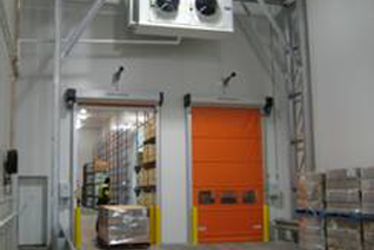
Cold Storage

Wineries

Other Projects


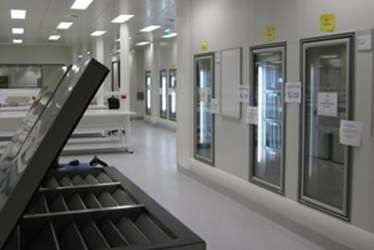
Australian Red Cross Blood Service NSW Building


Activities Undertaken By ISECO Engineering Services 

  1. Site Inspections
    This involved checking installed refrigeration works against signed off shop Drawings and specifications, and checking installation against industry recognised standards.
  2. Commissioning Assistance
    This involved reviewing commissioning procedures, witnessing selected tests, and reviewing commissioning Results.
  3. Qualification Testing Assistance
    ISECO undertook training in the specific GMP qualification procedures. And was involved in reviewing and witnessing agreed installation, operational, and performance qualification tests.

For further information contact ISECO.


Gourmet Gardens


With their new herb processing factory at Palmwoods, Gourmet Garden wanted to explore how far they could go to achieve new benchmarks in Australia for environmentally sustainable development, and it was ISECO\'s task to come up with green options for refrigeration.
The factory comprises a series of medium temperature processes and chiller rooms operating at design temperature in the range of 4 °C to 18 °C and one medium-sized coldstore with a design temperature of -25 °C.

ISECO Engineering Services was engaged to investigate and design a refrigeration system to address these issues, such as minimising energy consumption, reducing greenhouse gas emissions, minimising water consumption, and eliminating trade wastes, i.e., water treatment chemicals.
ISECO investigated the latest technologies available and how these could be applied.
Firstly, a survey of all the different refrigerants available, with natural refrigerants like ammonia and CO2, all the Freon and the Freon substitutes, as well as a new azeotropic refrigerant blend of hydrocarbon and ammonia. The azeotropic blend was too new, and Gourmet had stipulated that they did not want to use any Freon because of the ozone depletion potential and unfavourable global warming potential. Eventually, ammonia and CO2 were the preferred options, both being natural refrigerants that are readily available with system properties that provide very good energy efficiencies.

The next step was to decide what kind of plant best suited the factory, taking into account its size and future expansion.
From the energy efficiency perspective, a two-stage ammonia system was considered along with two-stage and single-stage ammonia- CO2 cascade systems, and the annual expected energy costs were compared. The ammonia/ CO2 cascade system provided the best solution with its use of glycol as a secondary refrigerant. The glycol, a mix of anti-freeze and water, is used to transport cooling to occupied areas in the factory. Due to ammonia\'s toxicity, it was placed away from workers for safety reasons. Ammonia is contained in the refrigeration plant room, and CO2 is used in the freezer store. Ammonia was chosen because its ozone depletion and global warming depletion potentials are zero.
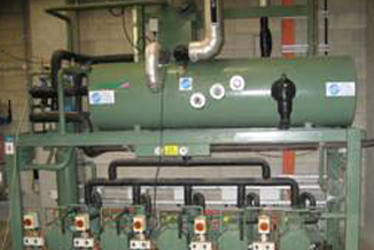
The low-temperature CO2 freezer system is direct expansion, and at nearly 100kWR capacity, it is one of the largest CO2 direct expansion plants built.
The heat rejection equipment uses Dricon condensers, which provide savings in water consumption of 70% over equivalent cooling towers or evaporative condensers while not compromising the energy efficiency of the plant.

Also, the plant incorporates a heat recovery system, where high-quality heat is continuously recovered from the refrigeration plant to preheat the hot water services for the factory.
Queensland Company, Scantec Refrigeration Technologies were chosen for the refrigeration contract. Site installation commenced in September 06 and the plant was successfully commissioned in early December. 

For further information contact ISECO.

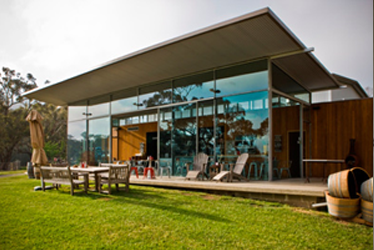
Medhurst Winery Employs Energy Saving Design


*Extract from The Australian & New Zealand Grapegrower & Winemaker February 2011-issue

Medhurst Wines 2011 vintage will be the first in its new winery. Winemaker Matt Steel shares the design concepts and process, with a particular focus on the new refrigeration system.

Key Features For the Refrigeration

Steel said he and the architects investigated using geothermal refrigeration for the project, but it couldn\'t meet the capacity required for the ultimate winery design size, which is for 250 tonnes of fruit.

In the end, the refrigeration system was designed with consultation from Linney Engineering, who are winery design engineers, and ISECO, refrigeration engineers with wine industry expertise.

Steel said the key elements of the refrigeration design include the barrel hall design, which provides a low temperature differential and low air speed air handling units to maximise ambient humidity.

\"There\'s also a cool room that can chill hand-picked fruit from 28 °C to 10 °C in 18 hours,\" he said.

\"This is a key requirement for quality of Medhurst wines, particularly with harvest dates moving forward into February, causing harvest fruit temperatures to be warmer than ideal.\"

\"The main Chiller set has a heat recovery circuit that will be used to pre-heat water to 50 °C for use in the winery.\"

The system has a large brine capacity, which acts as a heat store, and its control is linked to the VinWizard system so that any components (cool Room, barrel hall, individual tanks, chiller set) or the whole system can be programmed to run during off-peak, reducing power costs and increasing exchange efficiency, he said. The refrigeration system utilizes an air-cooled Australian Fluid Chillers chiller set with R507 refrigerant.

Click here to download the complete article.

For further information contact ISECO.